Smoked Salmon – An Easy and Delicious Recipe
by Rob Endsley/Prince of Wales Sportfishing
Smoking salmon can be as easy or difficult as you make it. By using high quality fish, however, you can produce a very high quality smoked fish product using even the most basic recipe and ingredients. Don’t be fooled into thinking the dark fish you just caught on the river is “good enough for the smoker” as the quality of the product at the end of the process will be exactly what you put into it. Below is a simple recipe that I use to smoke all my fish.
Preparing the Fish
After filleting the fish decide whether you want to leave the fish in whole fillets or single serving size pieces. I chunk my fillets into a size appropriate to serve several people, so we can pull it out of the freezer as we need it. The pin bones can easily be removed from the fillet with a set of needle nose pliers. At the end of the drying process below the pin bones protrude from the flesh making them quite easy to pull out of the fish.
There are literally hundreds of different recipes for smoking fish, most of which turn out a great tasting product in the end. This is a very simple recipe that I picked up from friend that produces some of the best smoked salmon I’ve ever eaten.
Ingredients
-1 Cup Brown Sugar (dark brown sugar works great, too!)
-1 Cup Coarse Kosher Salt
-1 Cup White Sugar
-3 Quarts of Water
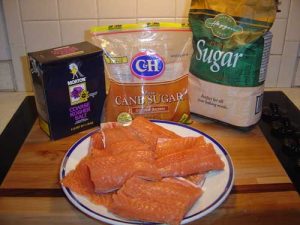
Combine the above ingredients in a plastic container or non-metallic mixing bowl. To make the ingredients dissolve more readily I use hot tap water and then allow the mixture to cool in the fridge before adding the fish to it. Also, be sure the salt you use for the brine is non-iodized, as iodized salt produces a metallic taste in the fish. For large quantities of salmon I place the brine and fish in a 5 gallon bucket and place it in a cooler full of ice overnight.

Kosher salt is highly refined which makes it dissolve quickly and absorb more readily into the fish. Depending upon your taste you can also add garlic, red pepper flakes, lemon pepper, cracked black pepper, Worstershire Sauce, and just about anything else you can imagine to this recipe. I prefer to sprinkle some cracked black pepper on my fish prior to placing it in the smoker.
Place the fish in the brine meat-side down and leave it in the refrigerator overnight.

Aside from the brine, the next step in this process is probably the most important in assuring your fish turns out excellent.
After removing the fish from the brine place it on the smoker racks and allow it to air dry until the surface is tacky-dry. During this time a glaze, also known as a pellicle, will form on the surface of the fish trapping the brine and fish oils within the meat. A fan can be used to speed up this process.
The Smoker
There are several commercially produced smokers on the market that work great for smoking fish. You’ll find smokers that use propane as a heat source and others that use an electric element to burn the chips and heat the unit. The smoker I use is a Masterbuilt with digital controlled heat and time settings. If I’m smoking smaller salmon like silvers I’ll cold smoke the fish at 110 degrees for two hours and then finish it at 170 degrees for two more hours.
For safety reasons, you should always plan on placing the smoker a safe distance from anything combustible and don’t plan on smoking fish on your wooden deck.

Alder, apple, and cherry chips are all sold commercially by companies like Brinkman and Little Chief. Alder is definitely my first choice when it comes to smoking fish.
Smoking the Fish
Since the fish is already on the racks all you have to do now is slide the fish in your Masterbuilt smoker and turn the smoker on. For a load of silver salmon I’ll set the smoker at 110 degrees for two hours and I’ll add one tray of alder chips during that time. Once the cold-smoke process is complete I’ll crank the smoker up to 170 degrees for two more hours and by the end of this time the salmon is usually cooked to perfection. If you want a little drier fish you can extend the cooking time. For king salmon I keep the cold smoke time the same but extend the cooking process to three or even four hours depending on how thick the fillets are.
I just started adding jalapeño pepper slices to my salmon and absolutely the flavor and spice it brings to the fish. If you like a little heat I recommend giving this a try…it is AWESOME!
Packaging the Smoked Fish

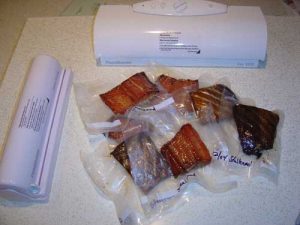
If you want to store your smoked fish in the freezer you’ll want to use a vacuum sealer like a Food Saver to package the fish. After the fish is sealed be sure to write the date and the species of fish on the package.
Once you’ve mastered this process, however, you’ll find that the fish rarely even makes it to the freezer!